

The Higher School Certificate maths exams are not simply harder versions of Year 10 assessments. The jump in both reasoning complexity and exam technique catches students off guard every year, and parents who may remember secondary maths as manageable are often more surprised than the students themselves. Watching a capable teenager sit frozen over a practice paper is uncomfortable, and the usual responses like studying harder or putting the phone away rarely address the actual problem. What makes HSC maths difficult is not just volume. It is the shift from procedural recall to applied reasoning, and that shift happens fast.
Most parents also underestimate how much the exam format itself shapes the difficulty. Questions are written to discriminate between students, not just to confirm knowledge. A student who understands a concept in class can still lose marks if their working is not structured to communicate clearly to the marker. That gap between knowing and performing is where a lot of Band 4 results quietly live, and closing it takes a different kind of preparation than most families plan for.
The Pressure Behind the Numbers

HSC Mathematics does not arrive alone. It competes with every other subject at once, sits inside an ATAR-weighted system that students understand only partially, and lands during a life stage that is already high-pressure by any measure. Knowing how to support your child through HSC maths often starts with separating the stress from the subject itself. When a teenager shuts down, the problem is rarely a single equation they cannot solve. It is the weight of feeling behind, the sense that something fundamental is broken rather than just rusty. Parents who treat maths as purely a skill gap can miss that the emotional state is blocking the skill entirely. What a student needs in that moment is not always a worked example; sometimes it is a clear, realistic plan that makes the pile feel manageable again.
Research from the NSW Centre for Education Statistics and Evaluation found that perceived difficulty and lack of confidence are among the top reasons students avoid higher-level maths, and those perceptions often form well before Year 11. Addressing them early makes a real difference to whether a student can sustain effort through the final exam period.
What the Syllabus Actually Demands
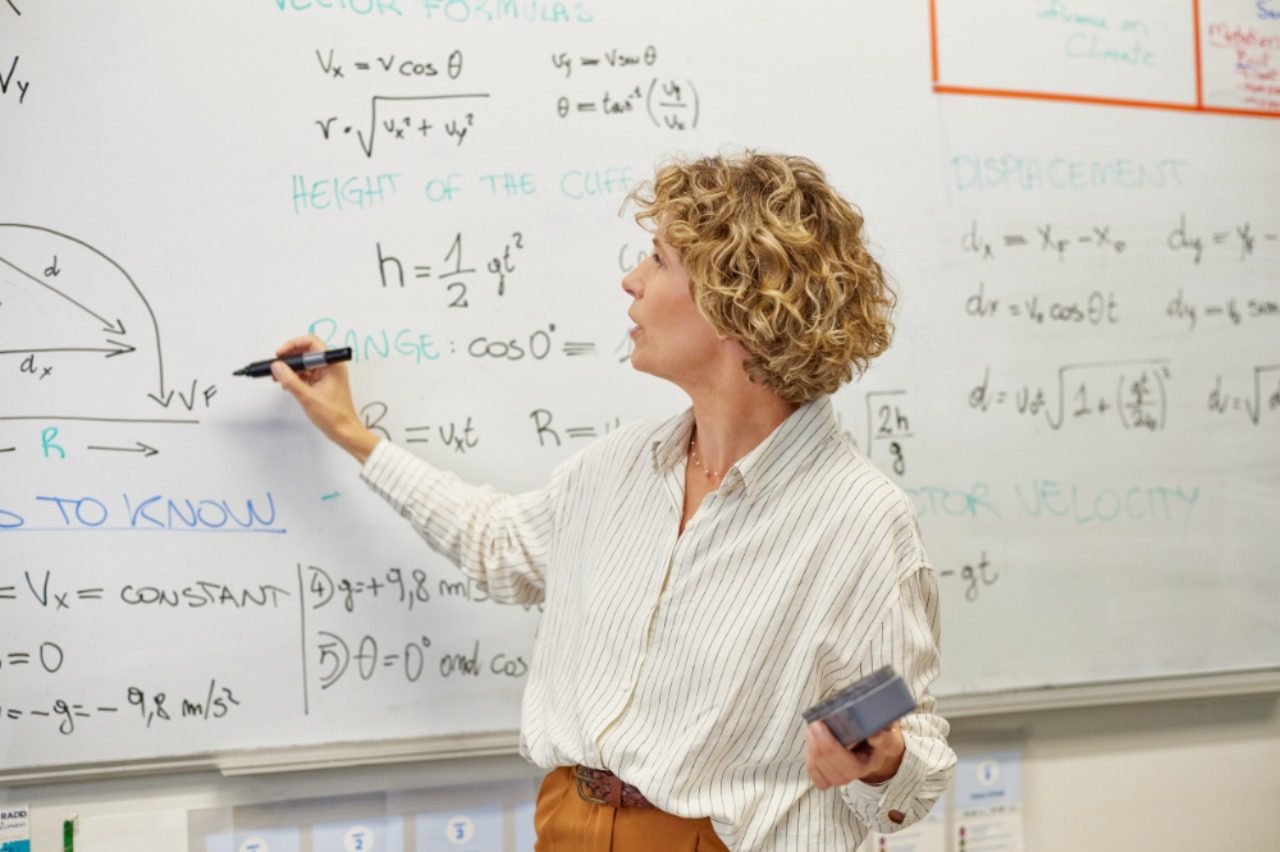
The NSW HSC Mathematics Advanced syllabus is not a collection of topics to memorise. It is structured around interconnected concepts that build across the two years of Stage 6, and a gap in Year 11 content does not stay contained. Students who lose ground on calculus fundamentals will find it costs them across multiple question types in the exam. The syllabus also expects fluency, not just familiarity. There is a real difference between being able to do a problem with time and textbook open, and executing it accurately under exam conditions in under four minutes.
Parents sometimes assume that tutoring or extra revision in Term 4 will recover lost ground. It rarely does, not because students are incapable, but because the fixing process takes longer when the gaps are structural. Reviewing the Australian Curriculum mathematics framework via ACARA shows just how deliberately each skill layer is designed to feed the next. Sequence matters here in a way it did not in earlier years, and catching up is genuinely harder once the exam window is close.
The Common Ways Parents Misread the Problem

The most frequent mistake is attributing poor results to effort rather than approach. A student who spends three hours on maths revision can still be practicing ineffectively, reworking easy problems to feel productive, copying solutions without reconstructing the reasoning, or skipping past worked examples because reading feels slower than doing. These patterns feel like studying. They do not produce results.
Parents apply the effort diagnosis because it is the most actionable one available to them. Telling a teenager to try harder is concrete; helping them study differently requires knowing what different looks like. That is worth thinking about honestly. What is actually visible from the outside is time at a desk, whether the book is open, whether the phone is away. The quality of what happens at that desk is largely invisible, and that is where the real gap usually sits.
When Tutoring Actually Works

Tutoring produces results under specific conditions. The tutor needs to understand the syllabus structure, not just secondary maths in general. The student needs to arrive with specific problems to work through, not a vague sense of being lost. Sessions need to happen often enough to maintain continuity, which typically means weekly rather than fortnightly blocks. A single intensive session before an exam rarely shifts much.
It also matters who drives the sessions. Students who come prepared, who bring recent test papers and circle the questions they got wrong, get meaningfully more out of the time. Parents can support that discipline without taking it over. Keeping a folder of past papers accessible, making sure there is time in the week’s schedule for the session and for any follow-up work before the next one, and treating the tutor as a resource rather than a rescue service: these are the practical contributions that actually move things forward.
Building Habits That Hold Across the Exam Period

The students who finish HSC maths with results that reflect their ability are usually the ones who built consistent habits in Term 2 and Term 3 rather than Term 4. Weekly past-paper practice. Keeping an error log. Working through NESA marking criteria, not just model answers. These are not complicated routines, but they require consistency across weeks when other subjects are also demanding attention.
Parents can help most by protecting the structure rather than policing the content. Making sure study time is not constantly displaced by other commitments, keeping the environment calm during revision periods, and not treating every result as an emergency are practical supports that hold their value for the full year. The maths knowledge has to come from the student. The conditions for it to develop can come from home.